Let's Talk Rudiments!
What Are Drum Rudiments?
Drum rudiments are short, repetitive sticking patterns that form the technical foundation for drummers. They help develop rhythm, hand control, speed, coordination, and dynamic skills. Just like scales in music, rudiments are essential building blocks during practice.
What Is a Rudiment?
Rudiments are primarily practiced on the snare drum and consist of various combinations: single strokes, double strokes, chord-like transitions, flams, and drags.
Benefits of Practicing Rudiments
- Enhances hand and wrist technique
- Improves speed and power control
- Strengthens rhythm understanding
- Enables smoother and more creative transitions across different drums
Essential Rudiments
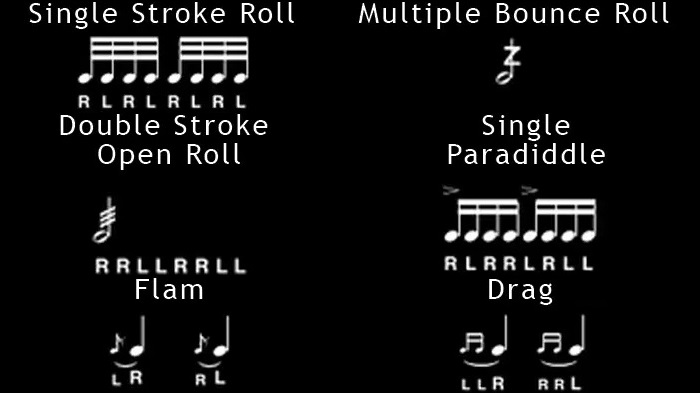
Single Stroke Roll
Alternate hands: R L R L or L R L R. This is the most fundamental rudiment that every drummer should master.
Double Stroke Roll
Two hits per hand: R R L L R R L L. It develops hand control and speed.
Paradiddle
A complex and versatile rudiment: R L R R L R L L. It boosts fluidity and coordination, useful for rhythmic variations.
Flam
A soft grace note played just before the main stroke (small r + big R). Creates a chord effect, commonly used in military rhythms.
Drag (Ruff)
Two quick strokes before the main hit: rrR or llL. Ideal for softer transitions and embellishments.
Advanced Rudiments
Flam Accent, Flamacue, Swiss Army Triplet, Pataflafla, Ratamacue, Single Stroke Four / Seven... These are crucial for fast transitions, grooves, and solo performances.
How to Practice Rudiments
- Practice with a metronome (start slow, then speed up)
- Apply to duple, triple, and quadruple rhythms
- Practice on both snare and full drum kit
- Develop both hands equally
- Record, listen, and repeat your practice sessions
Recommended Order for Beginners
- Single Stroke Roll
- Double Stroke Roll
- Paradiddle
- Flam
- Drag
These five rudiments are the foundation for mastering the 40 essential rudiments later on.
4-Week Rudiment Practice Plan
Week 1: Basic Exercises & Hand Balance
- Single Stroke Roll – 5 min – 60 → 90 BPM
- Double Stroke Roll – 5 min – 60 → 80 BPM
- Single Paradiddle – 5 min – 60 → 80 BPM
- Free practice – 10 min
Goal: Achieve equal speed and power in both hands, clean strokes, and perfect metronome alignment.
Week 2: Ornamenting with Flams and Drags
- Flam – 5 min – 60 → 80 BPM
- Drag – 5 min – 60 → 80 BPM
- Paradiddle review – 5 min – 70 → 90 BPM
- Mini combinations – 10 min
- Creative application – 10 min
Week 3: Coordination and Groove Practice
- All rudiments (cycled) – 15 min
- Rudiment in a groove – 10 min
- Try different accents – 5 min
- Creative jam – 10 min
Week 4: Speed, Dynamics, and Musicality
- Speed increase exercise – 10 min – 60 → 100 BPM
- Dynamic practice – 10 min
- Rudiment combinations – 10 min
- Play along with music – 10 min
Additional Tips
- Warm up your wrists for 2-3 minutes before starting daily practice.
- Practice in front of a mirror to observe your stroke positions.
Happy practicing!