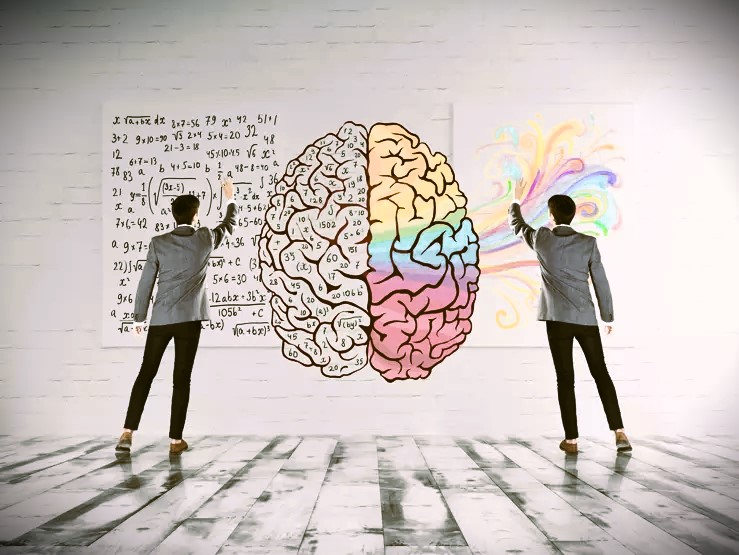
Are the drummers intelligent?
Actually, “being intelligent” and “playing drums” are not exactly the same thing, but drummers can develop certain cognitive advantages.
Drummers:
-
Improve their multitasking skills. Hands and feet play different rhythms at the same time, which trains the brain’s coordination centers intensively.
-
Gain sensitivity in rhythm and timing perception. This is linked to mathematical thinking and problem-solving.
-
Research shows that drumming can help create stronger connections between different brain regions.
-
They also develop discipline, focus, and motor control.
So drummers are not “born more intelligent,” but because of regular practice and coordination skills, they may have cognitive advantages in certain areas.
Let’s take a closer look at the question “Are drummers intelligent?” based on scientific research:
???? Drumming and Cognitive Functions: What Does Science Say?
1. Karolinska Institutet – Rhythm Ability and Intelligence
-
Professor Frederic Ullen and his team at Karolinska Institutet in Stockholm found that individuals with stronger rhythm-keeping ability performed better on a 60-question intelligence test.
-
Participants with better rhythm also had greater white matter volume in the brain, which indicates stronger connections between brain regions.
(Sources: Modern Drummer Magazine, Merriam Music, Audacy)
2. Motor Coordination and Neuroplasticity
-
In children aged 12–14, regular drum training improved hand-foot coordination and motor control, and these skills carried over into daily life. Improvements in concentration and communication were also observed. (Source: hartpury.ac.uk)
-
In general, musical training can cause structural and functional changes in motor, sensory, and integration areas of the brain. This creates “near transfer” effects (e.g., rhythm → motor skills) and “far transfer” effects (e.g., rhythm → language and problem-solving). (Sources: PMC, Wikipedia)
3. IQ, Memory, and Academic Performance
-
Especially in children, rhythmic music training (such as drumming) can improve IQ, memory, language, and mathematical skills. (Sources: ossia.edu.sg, Chinook School of Music, musichouseschool.com)
-
Children with musical education performed better in verbal memory, reading, and math skills. (musichouseschool.com)
4. Attention, Focus, and Behavioral Effects
-
Drum practice can improve attention, focus, and behavior control in children. In some autistic adolescents, it reduced hyperactivity and attention deficits while improving focus and behavior. (Sources: PMC, musichouseschool.com)
-
Group rhythm activities (like drumming) also increase endorphin release, raising happiness levels and pain tolerance. (Sources: Modern Drummer Magazine, Consequence)
5. Global Effects on Brain Structure and Function
-
Long-term musical training can change brain structure (e.g., increase gray and white matter volume) and strengthen functional connections. (Sources: PMC, Wikipedia)
Conclusion: Are Drummers Intelligent?
Rather than saying “being a drummer comes from intelligence,” it is more accurate to say that practicing rhythm regularly—especially from a young age—activates many areas of the brain and develops cognitive skills.
Drumming is not just about keeping rhythm; it also develops discipline, focus, motor control, social interaction, and emotional balance. These qualities support the idea that drummers may enjoy certain cognitive advantages.
Here are some direct quotes from scientific articles on drumming, the brain, and intelligence:
1. From Medical News Today – “Drumming makes your brain more efficient”
“According to a recent study, the cabling that runs between the two hemispheres of a drummer’s brain is significantly different from non-musicians.”
“The researchers believe that the anterior corpus callosum in drummers contains fewer fibers, but that these fibers are thicker than in non-drummers. … thicker fibers transfer impulses more quickly.”
➡️ Drummers show microstructural differences in the wiring between brain hemispheres—especially in the anterior corpus callosum—where thicker fibers allow faster communication.
2. Psychology Today – “Neuroscience and Music: Insights from Drummers’ Brains”
“Drummers showed a clear difference from non-musical controls in the corpus callosum … neuroimaging data suggested that the drummers had fewer but thicker fibers in the front part of the corpus callosum, which is responsible for motor planning.”
“This change in brain structure likely allows the professional drummers to more quickly coordinate motor processes between the two halves of the brain that control the two hands.”
➡️ Structural brain changes enable faster and more efficient motor planning and hand coordination.
3. British Columbia Medical Journal – “Your brain on drums”
“The study showed a distinct difference in the structure of the corpus callosum in drummers. … their anterior corpus callosum contains fewer fibers, but these fibers are thicker than those in the nondrummer control subjects. … thicker fibers were associated with quicker communication between the two hemispheres.”
➡️ Confirms the same structural adaptation: thicker fibers enable faster communication.
4. PMC – Bruchhage et al., 2020 – “Drum training induces long-term plasticity…”
“In this longitudinal neuroimaging study, we demonstrate that drum training leads to changes in sensorimotor systems and regions enabling higher cognitive control.”
“...cerebellar volume increases in left VIIIa volume combined with decreases in lobule VIIIb and vermis Crus I… complemented by increases in prefrontal cortical thickness…”
➡️ Drum training creates long-lasting structural effects on sensorimotor and cognitive control regions.
5. Frontiers in Psychology – “Musical Instrument Practice Predicts White Matter Microstructure…”
“Children who play a musical instrument … had higher scores on verbal ability and intellectual ability … as well as higher axial diffusivity (AD) in the left SLF than those who did not play…”
“Practice intensity … was correlated with axial diffusivity (AD) in the left SLF.”
➡️ Rhythm-based musical training improves white matter pathways in children, linked to language and intelligence.
6. Wikipedia – Neuroscience and Intelligence
“Significant correlations between intelligence and the corpus callosum have been found, as larger callosal areas have been positively correlated with cognitive performance.”
“White matter integrity … is important for information processing speed, and therefore reduced white matter integrity is related to lower intelligence.”
➡️ White matter integrity is directly related to intelligence and processing speed.