Drum Notation
Drum Notation
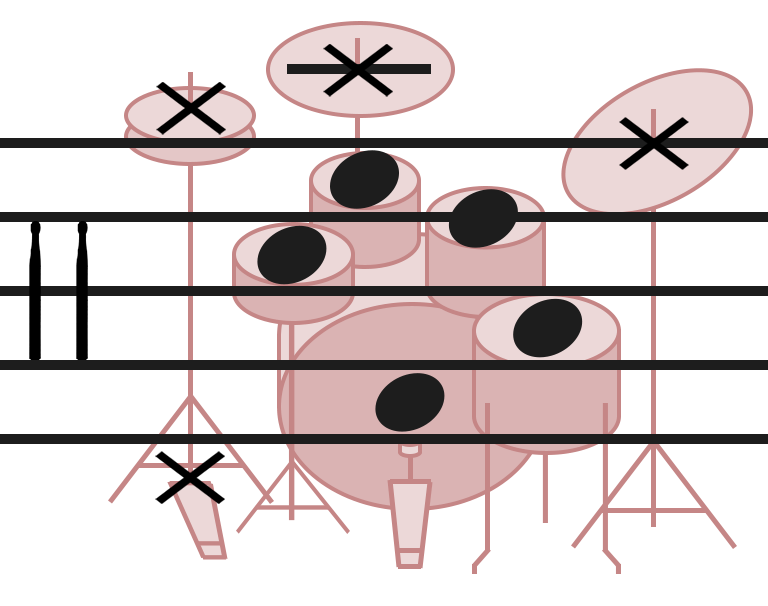
Drum notation, like notation for other musical instruments, provides information about rhythm, timing, and playing style. However, instead of melodic notes, it uses symbols specific to percussion instruments. Drum notation is usually written on a staff, but each line or space represents a different drum or cymbal (snare, kick, hi-hat, etc.).
Notation System
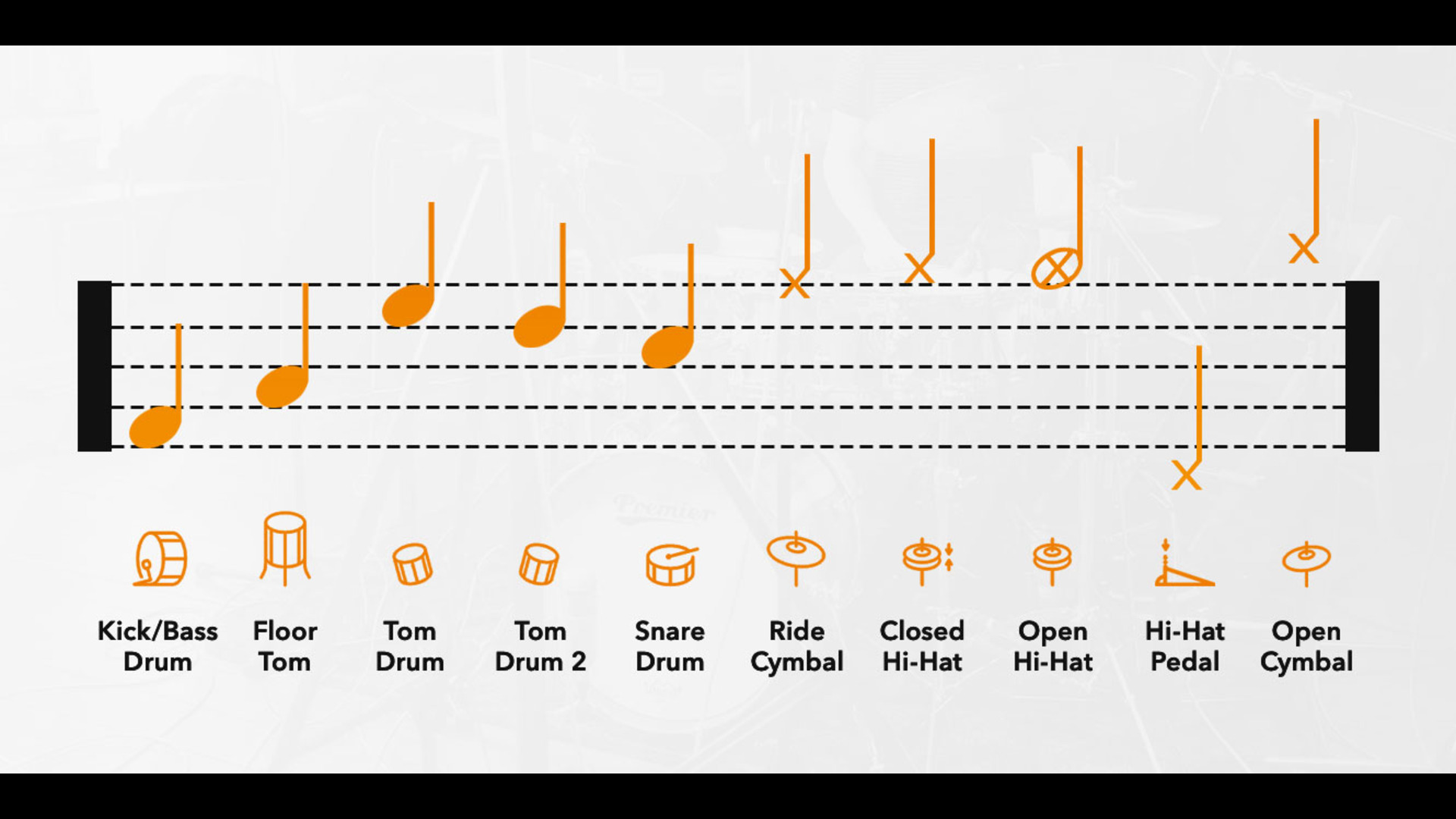
Drums typically use a 5-line staff, but each line has a different meaning.
Note: An X is usually used for cymbals, while solid note heads represent drums.
What About Non-Standard Drum Setups?
Even if a percussion instrument or drum sound isn’t part of a traditional drum kit, it can still be added to the staff. For this, commonly accepted but flexible notation rules are used.
Examples of Extra Sounds:
-
Cowbell
-
Tambourine
-
Jam Block / Wood Block
-
Splash / China Cymbal
-
Electronic Pad Sounds
-
Extra Floor Tom or Hi-Tom
-
Timbales / Conga
-
Shaker / Maracas
-
Hand Clap
How Are These Sounds Added to the Staff?
General Approach:
-
Use unused lines/spaces or
-
Different note head shapes and symbols.
A legend is usually placed at the beginning of the sheet music to explain which symbol represents which instrument.
Example Placements and Notation
| Instrument | Note Position (Example) | Note Head / Symbol |
|---|---|---|
| Cowbell | Above top line (ledger line) | Triangle, X, or square |
| Tambourine | Top space | X or X inside a circle |
| Splash Cymbal | Above crash | Small X or O |
| China Cymbal | Above ride | Large X |
| Shaker / Maracas | Top space | X or arrow direction |
| Hand Clap | Snare line | X inside C or hand symbol |
| Electronic Pad | Top/Bottom ledger line | Symbol + letter label |
| Rim Click | Snare line | Crossed note |
| Stick Shot | Snare line | “st” can be written above |
Different Note Heads and Symbols
| Symbol | Meaning / Usage |
|---|---|
| X | Cymbals, hand claps, shaker sounds |
| Triangle | Cowbell, metal blocks |
| Square | Electronic pad or trigger |
| (●) | Ghost note |
| ● → | Accent |
| ○ | Open hi-hat or open cymbal |
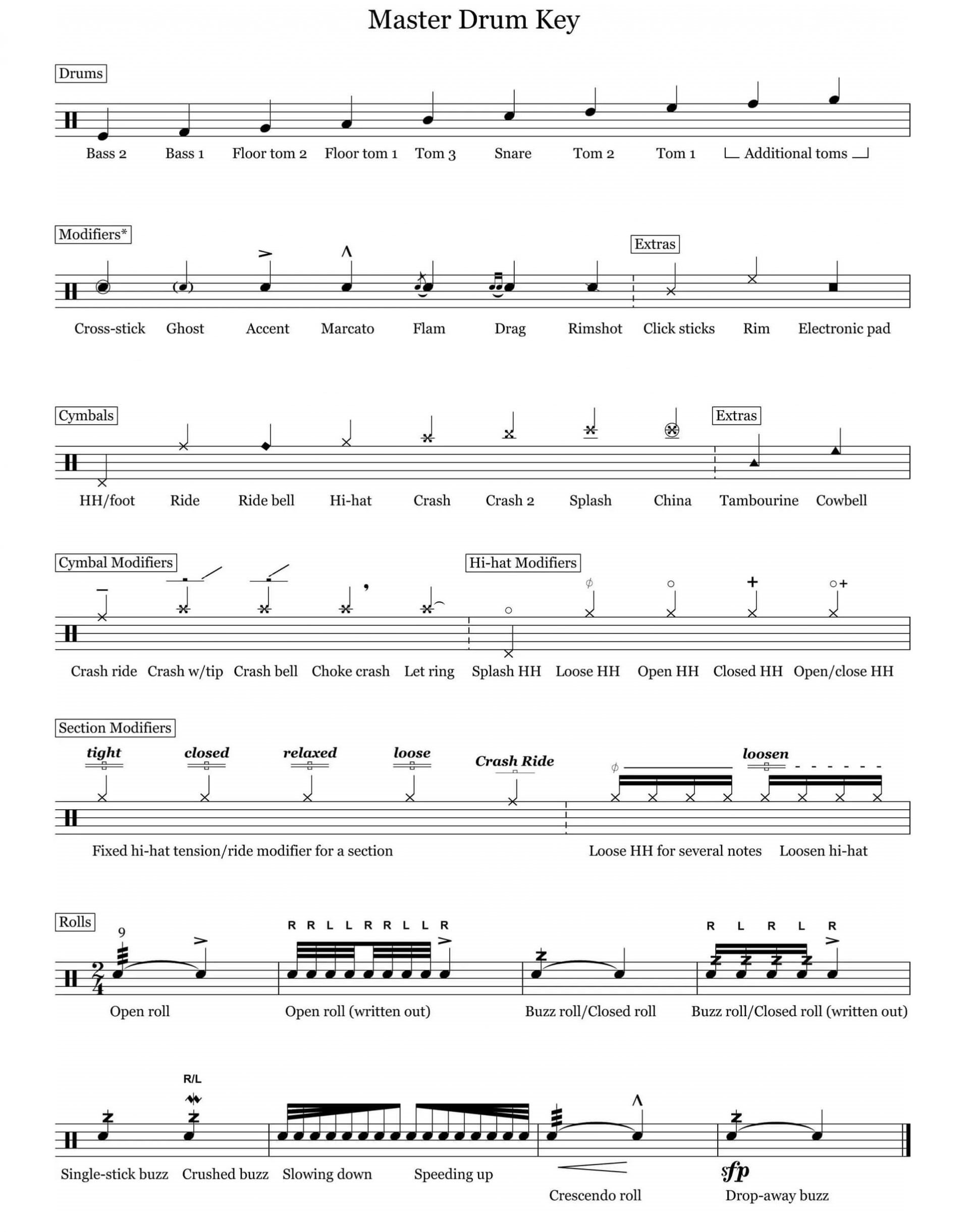
If a musical piece uses non-standard percussion, a Notation Legend or Drum Key Legend is included at the top of the sheet music.
Example Legend:
-
X on top space = Splash Cymbal
-
Triangle over top = Cowbell
-
Box on 3rd space = Electronic Pad (Synth)
-
(●) on snare line = Ghost Note
This helps the reader understand which instrument each symbol represents.
Tips for Writing Drum Notation
-
Keep the notation system consistent throughout the piece.
-
If playing in a band or orchestra, clarity and adherence to standard conventions is crucial.
-
Professional notation is usually prepared using software like Sibelius, Finale, or MuseScore, which also supports extra percussion instruments.