A Brief History of Drums
A Brief History of Drums
The history of drums dates back to the earliest periods of human civilization and they have been used in various forms across different cultures. Here is a comprehensive overview of the history of drums:
Ancient Periods
-
Early Period: The first use of drums goes back to prehistoric times. People created simple drums by hitting tree trunks or stretched animal skins to produce rhythms and communicate. These early drums were usually used in rituals and religious ceremonies.
-
Mesopotamia and Egypt: In ancient Mesopotamia and Egypt, drums played an important role in religious ceremonies and military contexts. Some clay tablets found in Mesopotamia depict drums. In Egypt, drums were used when offering sacrifices to the gods.
-
Asia: Drums have been used for thousands of years in China, India, and other Asian cultures. In China, drums were used for military, religious, and entertainment purposes. In India, traditional percussion instruments such as the tabla and mridangam hold significant importance.
Middle Ages and Renaissance
-
Europe: In medieval Europe, drums were used both in military and ceremonial music. Drums of this period were generally single-headed (with one side of skin stretched) and portable.
-
Ottoman Empire: Ottoman military bands, known as mehter, are among the oldest examples of military bands. The drums used in these bands were large and loud, designed to have a psychological impact on enemies.
17th to 19th Centuries
-
Developments in Europe: In the 17th and 18th centuries, as orchestral music developed in Europe, drums became more sophisticated. Timpani, which can be tuned, became an important part of orchestral music during this period.
-
Military Bands: In the 18th and 19th centuries, military bands gained prominence, and drums were used to keep rhythm and communicate. The foundations of modern drum types, such as the snare drum and bass drum, were established during this period.
20th Century and Modern Era
-
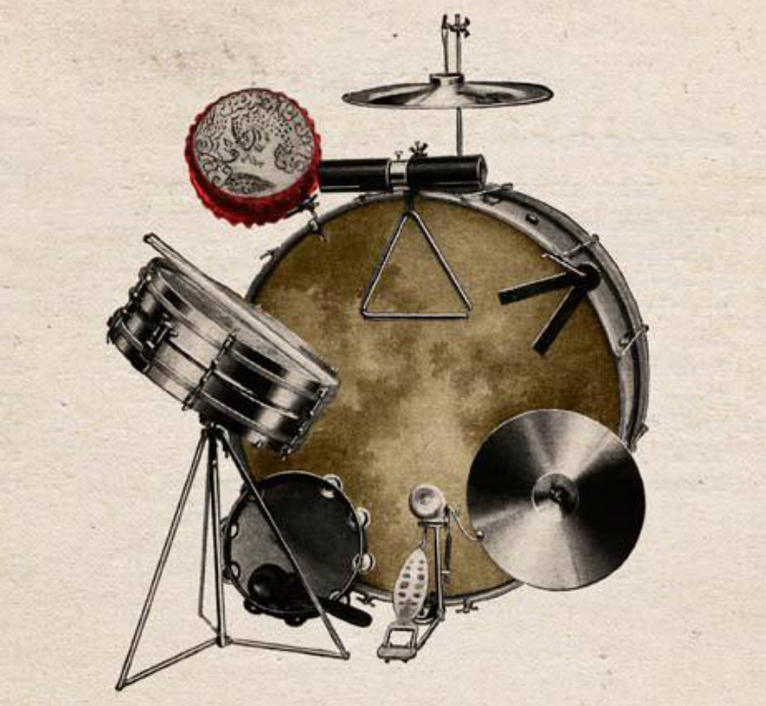
Jazz and Popular Music: With the rise of jazz in the early 20th century, the drum kit emerged. The drum kit included bass drum, snare drum, cymbals, and tom-toms, allowing drummers to play multiple percussion instruments simultaneously.
-
Rock and Pop Music: From the 1950s onwards, with the rise of rock and roll and pop music, the drum kit became an indispensable part of modern music. In rock music, drummers became prominent with strong and rhythmic beats.
-
Technological Advances: From the late 20th century, electronic drums and digital percussion instruments were developed. These allowed drummers to use different sounds and effects, and also provided a quiet way to practice.
Present Day
-
Various Types and Uses: Today, drums are used in almost every musical genre. There are many types of drums, including traditional acoustic drums, electronic drums, and hybrid sets.
-
Cultural Impact: Drums still play an important role in different cultures. African drums, Latin percussion instruments, and Asian percussion instruments add richness to world music.
Throughout history, drums have been used to keep rhythm, communicate, perform religious ceremonies, and provide entertainment. From simple percussion instruments to modern multi-piece drum kits, the evolution of drums reflects human history and cultural development.
The Importance of Drums in Turkish Culture
The drum is an instrument that carries significant cultural value in Turkish culture and holds great importance for Turkish history and folk music.
In Turkish culture, the drum occupies a privileged position due to its role as a symbol of sovereignty, its presence as the leading instrument in military bands (tuğ teams), its use as a means of public announcement, and its role in festivals, weddings, and funerals to convey sorrow or celebration.
The widespread presence of the drum in Turkish lands is largely because it is one of the earliest instruments used by the Turks. The drum has held an important place in Turkish cultural history from the Huns—the earliest Turkish states—to the present. Its names and forms have changed over time, yet it has survived to modern days. The diversity of drums observed in Anatolia reflects many cultural influences.
Its historical development, materials, construction, variations in size, and regional naming conventions make it a subject worthy of detailed research. This article, based on literature review and descriptive analysis, highlights the diversity of drums in Anatolia, their historical development, structural features, and the importance of size differences in different regions. The drum is a highly significant instrument in Turkish society.
Former Names of the Drum
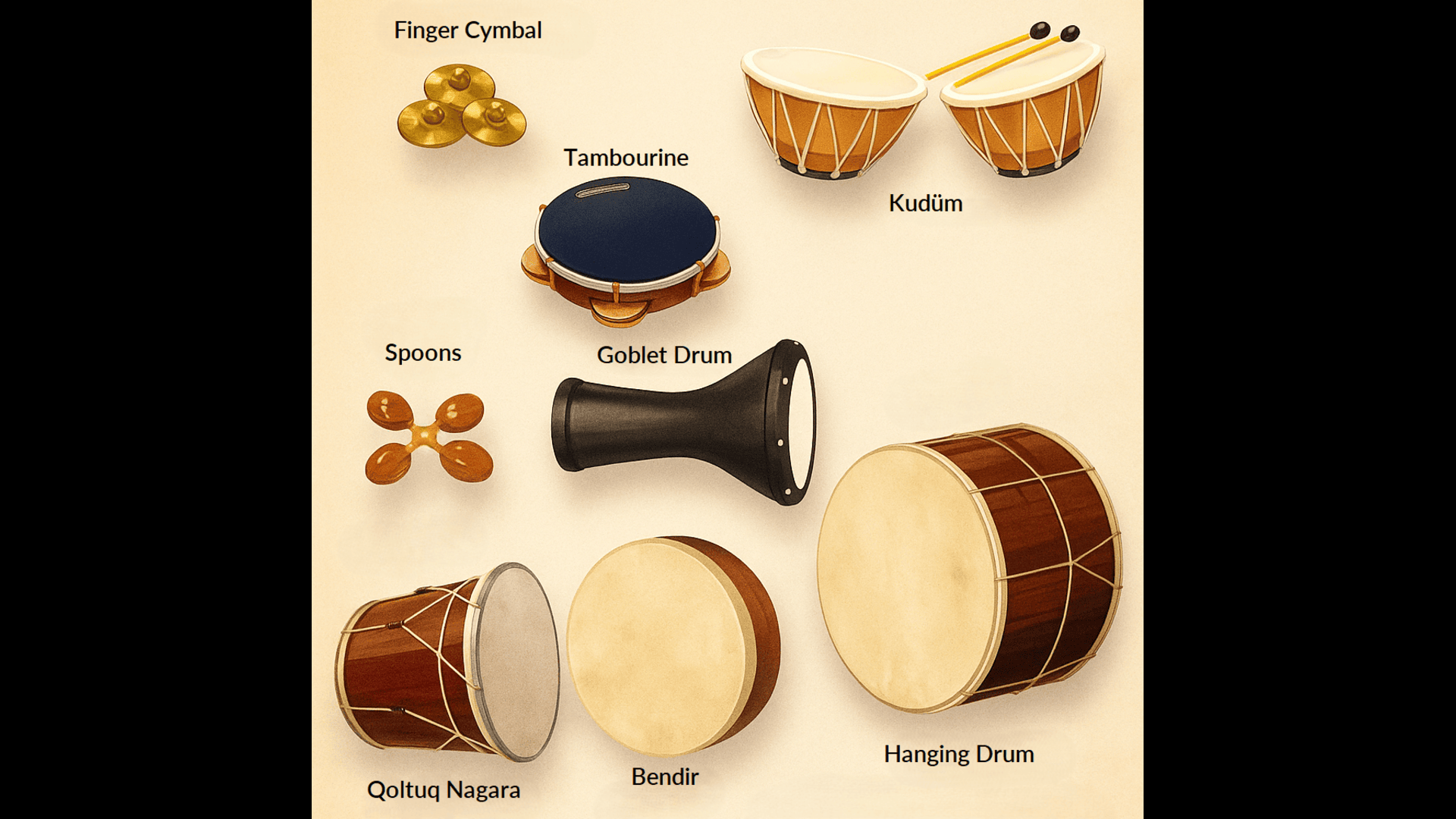
The drum is known by other names such as tuğ, tavul, köbürge, and tabıl (babl). Drummers were also called tabalzen, davulcu, or tabbal. The drum is one of the oldest musical instruments used by the Turks. In the 8th century, it was called köbürge, later tuğ, and by the 11th century, it was known as küvrüğ.
The drum has a cylindrical shape, with skins stretched over both ends of a wooden or metal frame. It is played using a strap over the shoulder, along with a beater or thin sticks. In folk music and mehter bands, drums are played with sticks and beaters. In bands and bugle–trumpet ensembles, drums are played only with a beater on the front side.
The drum produces sound that can be heard from a great distance. In a distant ensemble, the drum is usually the first instrument heard. Drums in mehter bands deliver rhythms most effectively. Due to its strong sound and ability to express rhythm clearly, the drum is one of the most powerful instruments a person can carry.
Besides music, the drum was also used as a means of communication. It was used for announcements in palaces, dormitories, and towns; for signaling the closing of city gates in the evening; for conquest news; fire alerts; regrouping scattered troops; locating the enemy during sieges; and notifying councils or military formations.